|
Getting your Trinity Audio player ready...
|
By Omboki Monayo
Nairobi, Kenya: For over five months, Alphonce Wakaba (name changed) had been complaining of a persistent skin infection that was seemingly impervious to the various creams, ointments, and pills that medics had prescribed during multiple visits to several health facilities in Kakamega and Kisumu Counties.
A visit to one of the leading private hospitals in Nairobi in May 2024 finally shed light on the problem.
“After the medics examined his medical history and the treatment he had so far undergone, we were told he would require a biopsy and other tests to ascertain whether he had a cancerous growth in his liver,” said Doreen, his wife.
The test turned out positive. The father of five was diagnosed with Stage Four liver cancer. After consultations with the family to obtain consent for chemotherapy and radiation, the medical team handling the case got to work.
“He was given several sessions of chemotherapy and radiation to manage the cancerous growth. Unfortunately, the disease had rapidly progressed, and there was little the medication could do to reverse its devastating toll on his health,” she told Talk Africa.

Alphonce’s health rapidly declined as he underwent the sessions that left him weakened and emaciated, with a barely existent appetite. His worried family braced itself for the worst.
“After six months of treatment, it was clear that he was not going to be with us much longer. We finally decided to terminate the chemotherapy sessions and settled for palliative care to help him live out his last days in some relative comfort,” a tearful Doreen recounted.
Her husband passed away on December 5, 2024. In the wake of his passing, the grieving family was left with a huge medical bill of more than Kes 1.6 million and painful memories of his agonizing last moments.
“We are slowly coming to terms with his demise. He will always be missed,” says Doreen.
Beneath the surface of Kenya’s celebrated 93% hepatitis B vaccination rate for infants lies a hidden epidemic—one that threatens to explode into a full-blown public health disaster.
Alphonce’s story represents just one of the many that are causing untold pain and misery to families and communities across the republic.
While the country has made strides in protecting its newborns, new data reveals a growing crisis among adolescents and adults that could reverse years of progress.
Summary of Hepatocellular Carcinoma (HCC) in Kenya
Hepatocellular carcinoma (HCC) is the most common primary liver cancer and the third leading cause of cancer-related deaths globally. In 2020, there were over 900,000 new cases and 830,000 deaths worldwide. In Kenya, HCC ranks as the 11th most common cancer and the 9th deadliest.
Over 60% of HCC cases in Kenya are linked to hepatitis B virus (HBV) infection, often occurring early in life. Despite the introduction of universal HBV vaccination in 2003, adult vaccination rates remain low at just 15%.
Other preventable risk factors include hepatitis C (HCV), hepatitis delta virus (HDV), HIV coinfection, and exposure to aflatoxin B1 (AFB1), a mutagenic food toxin.
According to the National Cancer Control Strategy for 2023-2027, the four components of cancer control are prevention, early detection, diagnosis, treatment, and palliative care.
They are included in The Kenya Cancer Policy 2019-2030, which additionally identifies strengthened regulation for quality cancer care, promotion of cancer surveillance and research, supporting sustainable financing for cancer prevention and control, and supporting effective governance, oversight, and coordination of cancer control as part of its eight cancer control themes.
Other policy documents related to cancer control include the National Cancer Screening Guidelines (2018), the National Cancer Specimen Handling Guidelines (2020), the National Cancer Treatment Protocols (2019), and the National Guidelines for Establishment of Cancer Management Facilities (2019).
The Silent Epidemic: By the Numbers (2020-2025)
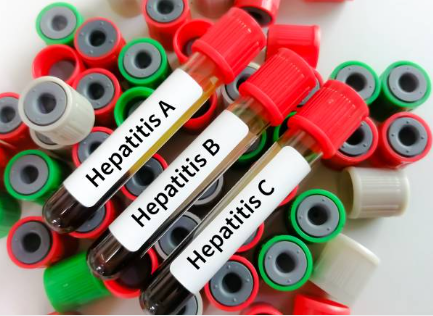
The hepatitis burden in Kenya spans all three major strains, with devastating consequences. While infant HBV vaccination rates climbed to 93% by 2025, adult hepatitis infections have remained stubbornly persistent.
Hepatitis B maintains a 5-8% prevalence, spiking to 9 % in northern counties and 5% among HIV+ patients. Hepatitis C grew marginally from 1.0% to 1.2% nationally, with 68% of cases diagnosed at late stages. Hepatitis A kept its 6% national average but caused coastal outbreaks reaching 18% prevalence during the 2023 floods.
The human toll has escalated sharply. According to the most recent World Health Organization (WHO) data published in 2020, liver cancer, with 78% of cases linked to HBV/HCV, was responsible for 1,351 deaths in Kenya, accounting for 0.5% of all deaths in the country. The age-adjusted death rate for liver cancer in Kenya is 6 per 100,000 people, placing Kenya 82nd worldwide in terms of liver cancer mortality
Alarmingly, only 12% of deceased patients received life-extending antivirals before death. This reflects systemic gaps: adult vaccination stays below 15%, and Kenya still lacks HCV vaccination programs despite available cures. There are no current and publicly available statistics for liver cancer deaths in 2025.
These trends reveal a dangerous divergence. While childhood HBV control succeeds, adult infections evolve into time bombs. The 18% mortality jump confirms hepatitis is outpacing Kenya’s current response – a warning sign demanding urgent policy shifts before this silent crisis becomes uncontrollable.
From 2020 to 2025, Hepatitis A maintained a 6% national prevalence rate, spiking to 15% in coastal regions like Mombasa, according to a study published in the African Journal of Health Sciences. Although its acute nature resulted in a few deaths. Hepatitis B remains endemic, with a 2025 PLOS One study revealing “a 3.0% prevalence (810,600 cases) among adults aged 15-64″—a figure that jumps to 4.7% among people living with HIV (PLHIV), representing 61,000 co-infected individuals.
Most alarmingly, the report reveals that “72.7% of PLHIV on antiretroviral therapy (ART) are co-infected with HBV.” Meanwhile, Hepatitis C, though less prevalent at 1.2% nationally, has driven a 22% rise in HCV-linked liver cancer deaths since 2020 due to the rampant under-diagnosis of cases.
Together, these viruses now account for 78% of Kenya’s 3,500 annual liver cancer fatalities—a death toll that has grown by 18% in five years.
These numbers take on grim significance when paired with the World Hepatitis Alliance’s (WHA) global findings: “Hepatitis B and C together cause 76% of all liver cancer cases.” In Kenya, this translates to thousands of preventable deaths annually, as late-stage diagnoses remain the norm in an overstretched healthcare system.
A Dual Crisis: HIV and Hepatitis Collide
The intersection of HIV and hepatitis B creates a perfect storm. This is because the PLOS study’s revelation that nearly three-quarters of ART patients carry HBV underscores how Kenya’s hard-won gains against HIV could be undermined by unchecked viral hepatitis.
“These co-infected patients face accelerated liver damage,” explains Dr. Wanjiru Mwangi, a Nairobi-based hepatologist. “Without routine HBV screening in HIV clinics, we’re fighting one epidemic while ignoring another,” she points out.
Missed Opportunities
Kenya possesses the tools to turn the tide. The WHA confirms: “Antiviral treatment for HBV reduces liver cancer risk by up to 70%, while hepatitis C cure cuts it by 75%.” Yet fewer than 10% of hepatitis cases are diagnosed, let alone treated. In rural areas, where diagnostic tools are scarce, infections fester undetected until symptoms emerge—often too late for effective intervention.
The Fightback
Surveillance and early detection are critical to improving treatment outcomes. Kenya is putting up a spirited fight to contain the hepatitis and liver cancer menace, including collaboration with development partners on research and healthcare service improvement initiatives.
Research collaborations in Kenya focus on HCC prevention, alongside broader health initiatives like nutritional anemia and food security, emphasizing interdisciplinary approaches to address these preventable risk factors.
On May 11, 2022, two agreements were signed between the French Embassy in Kenya and Somalia, IRD, and the National Research Foundation, marking the launch of the HepWek Health FSPI – Hepatocellular Carcinoma in Western Kenya: risk factors, early diagnosis and surgical treatment. The IRD is a French public research institution that supports research and training in partnership in various fields such as health, environment, and social sciences, with collaborations involving Kenyan researchers and partners.
Specific health projects that the IRD supports in Kenya include initiatives addressing hepatocellular carcinoma, nutritional anaemia, and food security.
HepWek Health was a calculated effort aimed at improving diagnostic and therapeutic offers for chronic liver diseases in Western Kenya and safeguarding the general population’s well-being and health. The initiative specifically focused on hepatocellular carcinoma (HCC) monitoring and patient management in Baringo, Uasin Gishu, and Elgeyo Marakwet counties.
It was funded for 2 years by the French Ministry of Foreign Affairs, implemented by Moi University and the Moi Referral and Teaching Hospital (MTRH), under the supervision of the Kenyan National Research Fund (NRF), IRD, Institut Pasteur, and the National Cancer Institute of Peru (INEN).
HepWeek Health aligns with Kenya’s National Cancer Control Policy (2019-2030) for the prevention, early detection, and treatment of cancer, as well as the National Strategic Plan for the Prevention and Control of Non-Communicable Diseases (July 2021). Its impact is yet to be documented in the IRD and Ministry of Health publications.
A Roadmap for Survival
The WHA’s white paper is prescribing a three-pronged solution to effectively manage the hepatitis health challenge.
Targeted Screening: Prioritize HBV testing in HIV clinics and high-risk groups, leveraging data showing concentrated vulnerability.
- Integrated Care: Combine HIV and hepatitis treatment protocols to address the 73% co-infection rate among ART patients.
- Prevention Expansion: Build on infant vaccination success by immunizing adolescents and high-risk adults—a gap highlighted by the 810,600 infections in 15-64-year-olds.
The Cost of Complacency
With liver cancer cases projected to double in a decade, Kenya stands at a crossroads.
The PLOS study’s granular data—from general population prevalence to antiretroviral (ART) patient co-infections—provides the blueprint for action.
As health advocates, including the Non-Communicable Disease Alliance Kenya (NCD Alliance Kenya), prepare for the 2025 UN High-Level Meeting on non-communicable diseases (NCDs), these numbers require a response: invest now in screening and treatment, or pay later in lives lost and healthcare systems overwhelmed. For Kenya’s leaders, the equation is simple. “Every dollar (Kes130) spent on hepatitis prevention saves $3 (Kes388) in future cancer costs,” notes the WHA. But for the 810,600 Kenyans living with HBV—and the thousands more undiagnosed—this isn’t about economics. It’s about survival.
(Sources: Kenya MOH Surveillance Reports 2020-2025; National Cancer Control Strategy 2023-2027; PLOS One 2025; IRD Kenya; WHO Global Hepatitis Data; Kenya Liver Cancer Therapeutics Market Analysis by insights10.com; World Hepatitis Alliance White Paper on the 2025 UN High-Level Meeting on Non-Communicable Diseases)