
|
Getting your Trinity Audio player ready...
|
By Doris Kathia
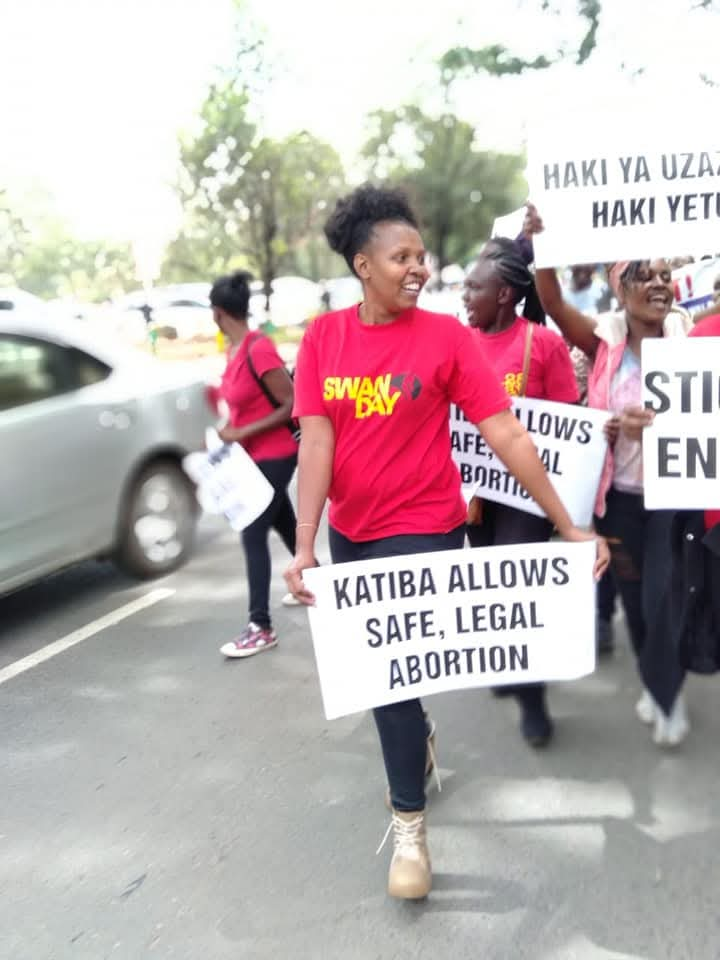
In many communities, people say that abortion is taboo. But what is truly taboo is how we continue to ignore a growing public health menace despite having the data, resources, and constitutional mandate to address it. Imagine this: each day, seven Kenyan women and girls die because they lack access to safe abortion services. It’s a tragedy rooted in a broken policy environment, stigma, and systemic underinvestment in reproductive health services. How many more women must die before we stop treating abortion as a political game and start treating it as a public health issue? The recent nationwide study on abortion incidence and post-abortion care in Kenya, conducted by the African Population and Health Research Center and the Ministry of Health, lays bare an uncomfortable truth: unsafe abortion is a human rights emergency.
The study found that an estimated 792,694 induced abortions occurred in Kenya in 2023 alone. That translates to 57.3 abortions per 1,000 women of reproductive age, one of the highest rates in Africa. Although over the years, there has been a shift toward using safer methods like medication abortion (MA), many women still rely on unsafe methods due to stigma, misinformation, cost, and lack of access. Even worse, a significant number of women with abortion complications do not receive adequate medical care.
In the 21st century, no woman or girl should be forced into the back streets to terminate a pregnancy. Yet the current legal, social, and policy restrictions in Kenya mean that even where abortion is permitted under certain circumstances, such as when the woman’s life or health is at risk, safe services are often inaccessible or unavailable. The 2012 study by the Ministry of Health and partners estimated over 464,000 induced abortions; today, that number has nearly doubled. Why? Stigma, lack of access to accurate information, fear of criminalization, and economic inequities block the path to safe choices.
Over the years, within the public health facilities, post-abortion care (PAC) has improved, with fewer women suffering from severe complications than a decade ago. Only 18.3% of primary health facilities are equipped to provide basic PAC, and less than 25% of referral facilities can provide comprehensive services. However, the recent study reveals that over 92% of women who received treatment for complications were counselled on contraception, yet only 43.5% left with a method.
Why is this gap so wide? Why are we not integrating family planning seamlessly into post-abortion care? Your answer is as good as mine. The weak health systems, insufficient provider training, lack of commodities, informed choice, and the deeply ingrained stigma that still haunts conversations around sexuality and reproductive rights. Can we afford to let these systemic gaps persist, knowing they cost lives?
For instance, the regions with the highest unintended pregnancy rates, Central, Nairobi, Nyanza, and Western, also have the highest abortion rates. This correlation is not a coincidence. When family planning fails or is out of reach, abortion becomes the fallback, whether it’s legal or not.
The Kenya Demographic and Health Survey (2022) revealed that Kenyan women still have, on average, one more child than they desire, particularly among rural and low-income populations. Come to think of it, what are the choices for that teenage girl in rural Kenya, who has been defiled, has no access to contraception, no comprehensive sexuality education, and no supportive adults to turn to? On the other hand, when you make a decision out of fear, shame, or desperation, why should that decision lead to a hospital bed, a lifetime of trauma, or even death? This unmet need for contraception is a denial of women’s autonomy and dignity.
We must urgently reaffirm access to safe abortion as a human right, not a privilege based on geography, income, or marital status, and invest in public education and de-stigmatization of abortion, enabling women and girls to make informed decisions without fear or shame. We must also ensure the full implementation of Kenya’s reproductive health policies, including the reinstated standards and guidelines for reducing maternal mortality from unsafe abortion.
Lastly, there is a need to scale up access to modern contraception, ensuring every woman can prevent unintended pregnancies. It is time to break the silence around abortion and embrace evidence-based, rights-based solutions to ensure that every woman and girl in Kenya has access to safe, dignified reproductive health care.
Ms. Kathia is a Human Rights Defender and a communications specialist.