|
Getting your Trinity Audio player ready...
|
By Xu Yawen
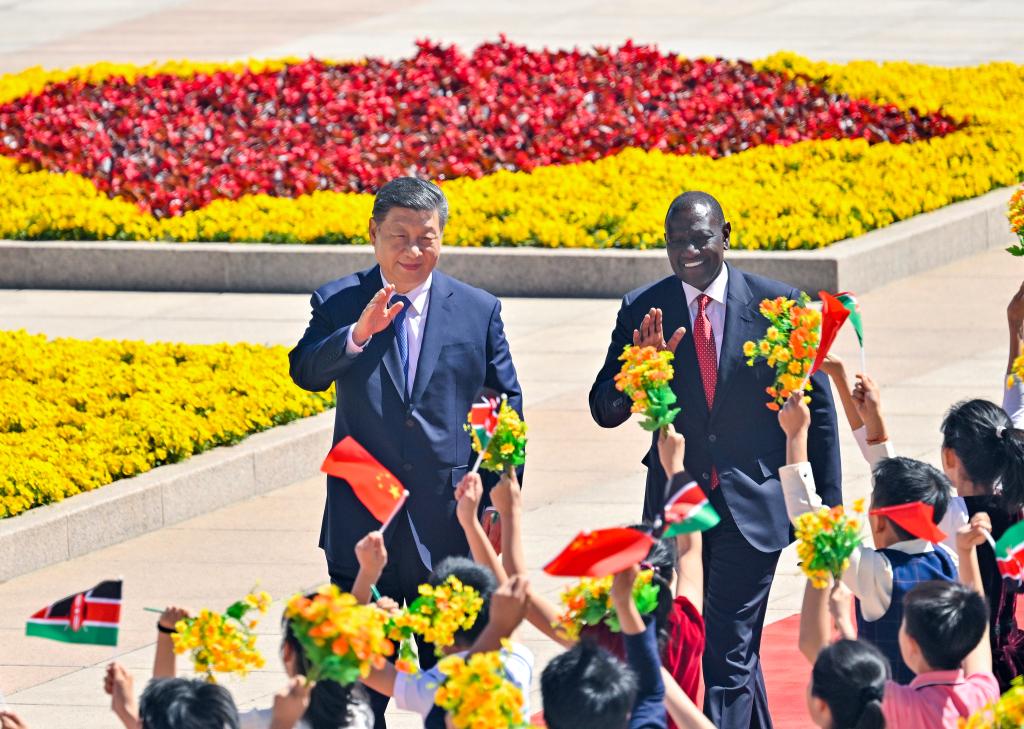
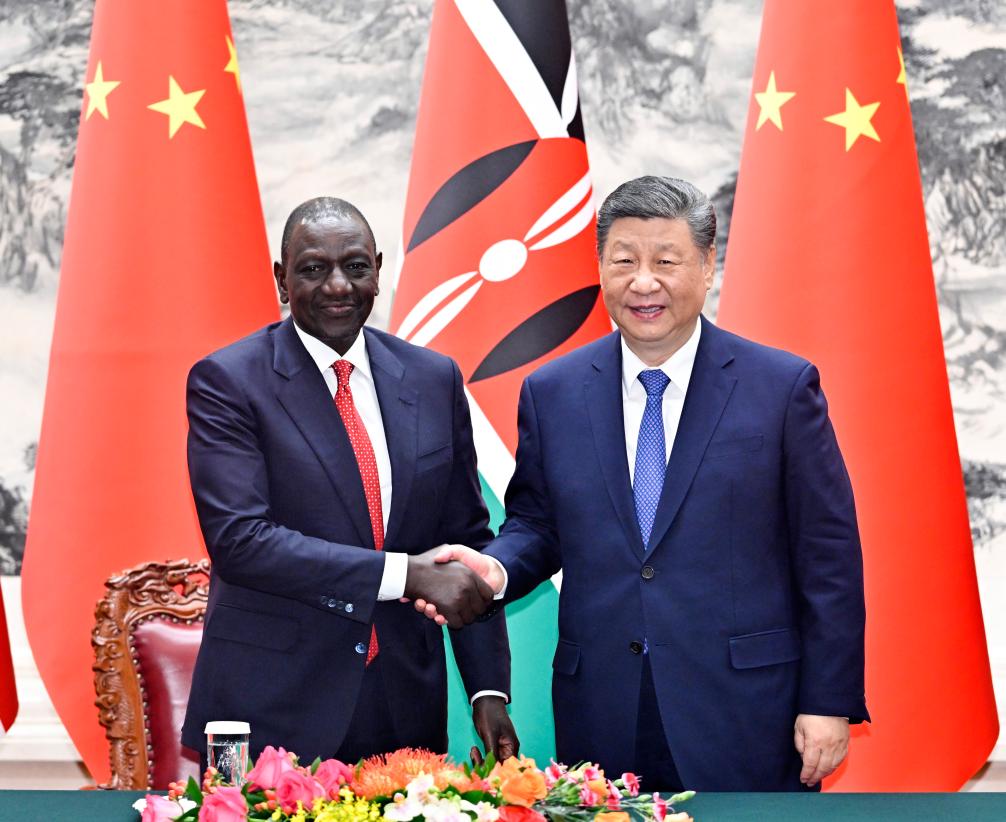
Beijing, China: Kenya’s President William Ruto’s recent state visit to China in April represented a landmark moment in the enduring relationship between China and Kenya. During the five-day visit, President Ruto and President Xi Jinping elevated bilateral ties to a new level – a “China-Kenya Community with a Shared Future for the New Era.”
In light of an increasingly turbulent global environment, both sides pledged to further deepen cooperation and position China-Kenya relations as a model for broader China-Africa engagement.
The visit culminated in signing 20 Memoranda of Understanding and other cooperation frameworks, covering a wide range of sectors such as the digital economy, trade, education, science and technology, water resources, agriculture, and railway development.
In their joint statement, the two leaders emphasized their commitment to enhancing global stability through China-Africa solidarity and cooperation. By safeguarding the common interests of developing countries, they aim to promote a multilateral system that fosters “inclusive economic globalization.”
Kenya’s strengthened partnership with China holds particular significance, especially as it seeks to diversify its trade relationships in the face of a looming global recession and rising trade barriers exacerbated by the United States’ imposition of 10% tariffs on its exports.
 The two nations also reiterated their shared vision of aligning China’s Belt and Road Initiative (BRI) with Kenya’s Vision 2030 development agenda.
This expanded partnership with China, especially through high-quality BRI cooperation, is a key driver of Kenya’s infrastructure development and economic resilience. During his visit to Peking University, President Ruto remarked, “Our cooperation under the Belt and Road Initiative has delivered flagship infrastructure projects that are reshaping national connectivity and regional integration.”
The impact of this partnership is already visible in Kenya’s transformative infrastructure and economic landscape. Since joining the BRI in 2017, Kenya has witnessed dramatic changes, with some of the most notable developments including the Mombasa–Nairobi Standard Gauge Railway. This project has become a symbol of the bilateral cooperation between the two nations.
The railway, stretching approximately 480 kilometers, uses Chinese standards, technology, and equipment. It has significantly reduced travel times for passengers and cargo, boosting trade and alleviating road congestion. This flagship project plays a pivotal role in advancing Kenya’s Vision 2030, which aims to transform the country into a middle-income economy. Since its launch, the railway has transported more than seven million passengers and carried over 20 million tons of cargo. Furthermore, it has generated over 74,000 jobs and contributes over 2% to Kenya’s GDP.
Beyond transportation, the new Kipevu Oil Terminal (KOT) in Mombasa exemplifies the BRI’s transformative impact on Kenya’s energy infrastructure and security.

Inaugurated in 2022 and constructed by China Communications Construction Company, the terminal is the largest of its kind in East Africa. It features four berths capable of handling vessels simultaneously, each carrying up to 200,000 tons. The terminal’s increased offloading capacity reduces vessel turnaround times, lowers fuel import costs, creates jobs, and builds a skilled local workforce in Kenya. This further cements Kenya’s position as a regional logistics hub, driving industrial development and economic growth.
Additionally, the cooperation between the BRI and Kenya Vision 2030 extends to essential water conservation projects, such as the Thwake Dam in southern Kenya.
To date, the Thwake Dam, Kenya’s most significant water infrastructure project, integrates dam construction with water supply, irrigation, and power generation. Since construction began in 2018, it has generated around 2,000 local jobs, with over 90% of the workforce being Kenyan nationals. The project also includes a range of social responsibility initiatives, including the construction of nine new hospitals, six water wells, and the renovation of 16 schools, benefitting surrounding communities. Moreover, the project prioritizes environmental sustainability by implementing waste recycling systems and wildlife habitat protection, ensuring that the dam addresses Kenya’s immediate water needs while supporting long-term ecological and social development.
The China-Kenya partnership also extends beyond infrastructure. There is a growing emphasis on capacity building and knowledge transfer. Thousands of Kenyan students have benefitted from Chinese government scholarships and technical training programs, gaining engineering, IT, and agriculture skills. Cultural exchanges and sister-city relationships are also flourishing, fostering deeper mutual understanding between the peoples of the two countries.
Looking ahead, the prospects for China-Kenya cooperation are promising. The vision of a China-Kenya community with a shared future is not merely a political declaration but a practical roadmap. Through the Belt and Road Initiative, China and Kenya are not just focused on infrastructure development. They also share concepts for growth and governance tailored to their national contexts.
As President Xi Jinping noted during the bilateral meeting, China and Kenya should continue to firmly support each other in safeguarding national sovereignty, security, and development interests; in exploring development paths suited to their respective national conditions; in deepening experience-sharing in state governance; and in being fellow passengers and good friends on the road to modernization.
By further deepening cooperation under the BRI, China and Kenya will achieve their respective development goals and set a shining example for South-South cooperation. This partnership contributes to building a more just, equitable, and prosperous world, setting the stage for shared growth in the years to come.
Xu Yawen is a reporter and international affairs commentator with CGTN Radio based in Beijing, covering Chinese foreign policy, economy, and technology.