|
Getting your Trinity Audio player ready...
|
By Lenah Bosibori
Nairobi, Kenya: Farming may not be every Kenyan youth’s dream, but it could be their biggest opportunity. At the Food and Inclusive Agri-Finance Summit (FINAS) 2025, leaders from Heifer International Kenya and the government made a passionate call to action: the future of African agriculture depends on its youth, smart technology, and bold investment in innovation.
During the summit, the stakeholders sent out a message of empowering young agripreneurs to secure Africa’s food future and driving inclusive economic growth.
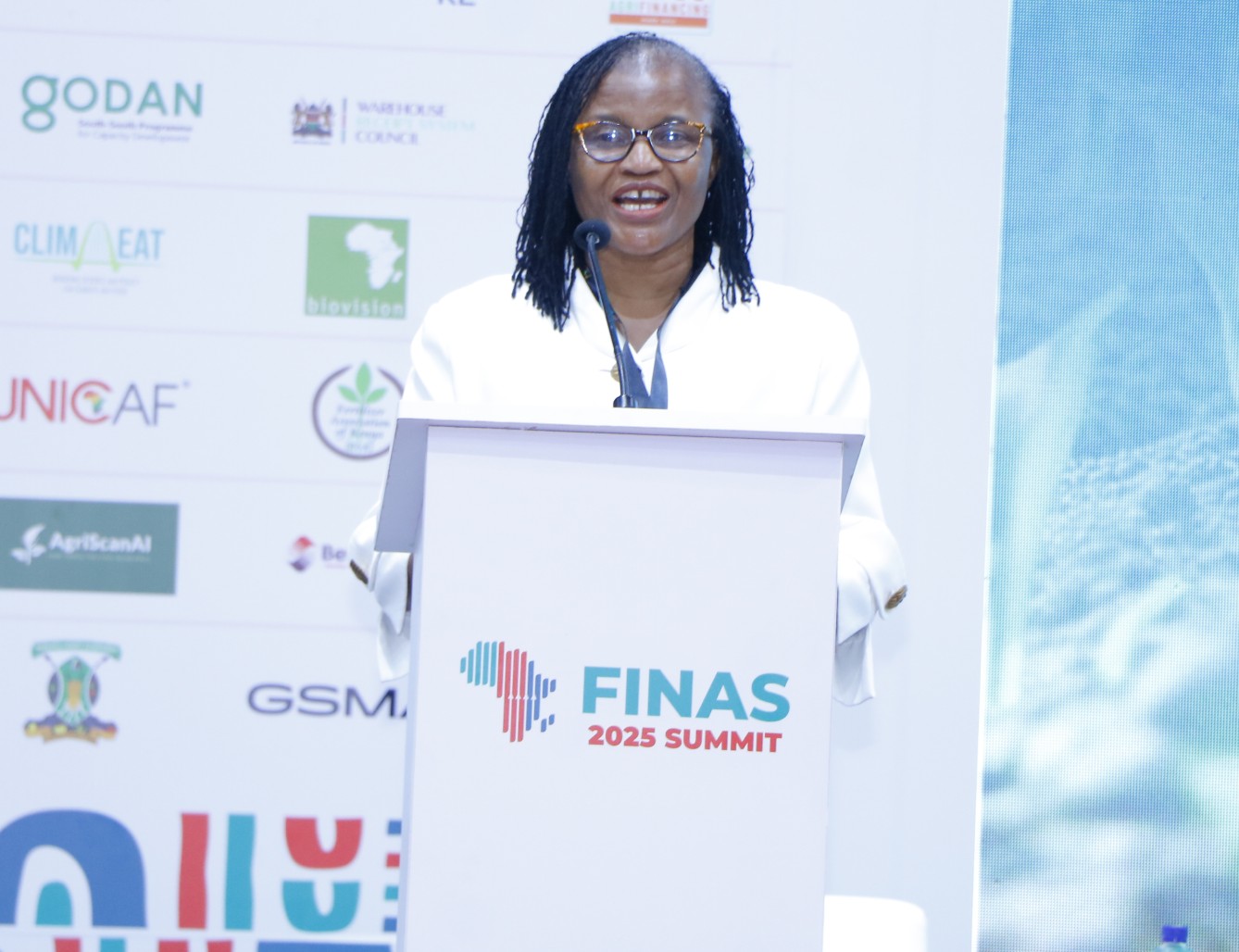
Delivering her keynote address, Clarice Bugo-Kionge, Country Director of Heifer International Kenya, challenged stakeholders to place youth at the center of Africa’s agricultural transformation by investing in agri-innovation.
“With a population expected to reach 2.5 billion by 2050 and climate change threatening our food systems, business-as-usual is no longer viable,” Bugo-Kionge said. “We must empower our youth and invest in their innovations, not tomorrow, but today.”
Her address, themed “Transforming the Future of Africa’s Agriculture by Supporting Youth-led Agribusinesses and Embracing Technology and Innovation,” drew hundreds of delegates including youth innovators, development partners, policymakers, and government leaders.
She emphasized that Africa’s young people are already revolutionizing agriculture by deploying mobile technologies, precision farming tools, and climate-smart innovations. But these ideas often hit walls due to financing gaps and limited access to training.
“It’s a sobering reality,” she noted. “While smallholder farmers form the backbone of African agriculture, they are missing out on life-changing innovations because of systemic barriers, barriers we must dismantle together.”
According to Heifer International’s regional report “The Future of Africa’s Agriculture,” just 23% of youth in agriculture currently utilize any form of agritech largely due to lack of financing, training, and infrastructure.
Heifer International is addressing these gaps through programs like the AYuTe Africa Challenge (Agriculture, Youth, and Technology), which identifies and funds scalable agri-innovations led by young Africans.
In Kenya alone: Over 400 youth-led agribusinesses have applied since 2022 and more than 230 startups have received coaching and over $40,000 has been disbursed in catalytic grants.
One such startup, DigiCow, offers digital herd management tools and solar-powered irrigation systems, empowering smallholder farmers with practical, accessible solutions.
Penina Wanja, the founder of DigiCow, says that she started the venture after interacting with smallholder farmers after having been employed as an extension officer; she was inspired to start her venture that ensures that farmers are reached and supported.
“We developed a system that enables farmers to access information that also enables stakeholders to reach out to the farmers, assisting and supporting the veterinary service providers, and assisting the visibility into what the farmers are doing,” said Wanja.
She adds that financing the company was a big problem. “I started by convincing the nearest people around me, friends and family members, to come. Later on, we attracted strategic partners, including Heifer International Kenya, and also the World Bank and Mercy Corps.
Currently DigiCow works with 700,000 farmers and it is looking to increase the number to 1.5 million in the next two years.
Further, Bugo-Kionge added that “Governments must create enabling policy environments. The private sector must offer resources and mentorship. Financial institutions need to innovate around de-risked lending. And development partners must embed youth-led tech into programming.”
“Investing in youth-led agritech is not charity. It’s smart economics. It’s the clearest path to food security, climate resilience, and inclusive growth,” she said.
Government Commitment
In his remarks, Prime Cabinet Secretary Musalia Mudavadi acknowledged the urgency of agricultural reform, emphasizing the need for smarter, more inclusive financing models.
“Africa is home to 60 percent of the world’s uncultivated arable land, yet the promise of African agriculture remains largely untapped,” he said. “Our continent is endowed with biodiversity and indigenous knowledge systems, yet this potential remains underutilized.”
He noted that traditional financing mechanisms exclude the very farmers who feed the continent.
“Too often, capital flows bypass smallholder farmers, overlook women producers, or are structured in ways that fail to reflect the seasonality, risk profile, and diversity of the agricultural sector,” he said. “What we need now is not merely more financing, but smarter, context-sensitive financing.”
He pointed to government efforts such as credit guarantee schemes, e-voucher systems, and tailored financing instruments for women and youth-led cooperatives as steps in the right direction.
Both speakers emphasized the need for regional collaboration under the African Continental Free Trade Area (AfCFTA) and highlighted the climate crisis as a central threat to food systems.
“Climate change has brought unpredictable rainfall, droughts, and pest outbreaks like the fall armyworm,” Mudavadi warned. “Meanwhile, up to 40% of perishable produce is lost post-harvest due to poor infrastructure and storage.”
He called for transformational financing, moving from reactive to proactive models that unlock land, labor, and local knowledge.
“This is the shift we are called to make: from transactional to transformational financing,” he said. “One that anticipates opportunity and scales innovation.”
A Shared Responsibility
Both leaders concluded with a call to action: Africa cannot wait. Youth must be empowered. Innovation must be funded. Collaboration must be intentional.
“Africa does not lack ideas; it needs coordination, courage, and capital,” Mudavadi said.
“Let us listen to the women holding communities together. To the youth daring to innovate. To the farmers who rise each morning to feed this nation. They are not just the beneficiaries of our food system; they are its heartbeat.”
“The question is not whether we can afford to invest in youth. The question is whether we can afford not to. The cost of inaction is far greater than the investment required,” reiterated Bugo-Kionge.